Ready to flex your mathematical muscles? Forget Sudoku – we're diving into the deep end! These aren't your average brain teasers.
Prepare to be stumped by a collection of **challenging number riddles for mathematicians**. We've curated a selection designed to test your logic, problem-solving skills, and number theory knowledge.
Get ready to unlock your inner genius. Let's get started!
Best Number Riddles for Mathematicians: Put Your Skills to the Ultimate Test
I am a prime palindrome in base 10. Removing my central digit leaves another prime. What number am I?
151
I am the smallest number expressible as the sum of two cubes in two different ways. What number am I?
1729
I am a perfect square and a perfect cube. The sum of my digits is a perfect square. What am I?
64
I am a repdigit number whose digit sum is a prime number. What is the smallest possible value for me if I'm not 1?
22
I am a Mersenne prime. My exponent is also a Mersenne prime. What am I?
127
I am a narcissistic number in base 10. My value is equal to the sum of my digits, each raised to the power of the number of digits I possess. What number am I if I am greater than 100?
153
I am the smallest Carmichael number. What number am I?
561
I am a number that reads the same forwards as backwards in base 2 and base 10. What is the smallest number greater than 1 that satisfies this?
3
I am a factorial that, when read as a number, contains no zeros. What is the largest factorial less than 100 that meets this criteria?
6
I am a perfect number. What is the smallest perfect number?
6
I am a prime number that, when reversed, produces another prime number. Furthermore, both primes are less than 100, and the difference between them is a multiple of 6. What are the two primes?
13 and 31
I am a number whose digits sum to 10, and I am divisible by 10. What is the smallest such number greater than 10?
190
I am the only number that is 1 more than a square and 1 less than a cube. What number am I?
26
I am a triangular number and also a square number. What is the smallest such number greater than 1?
36
I am a number that, when multiplied by 2, has the same digits as the original number but in a different order. I am smaller than 100,000. What number am I?
142857
Challenging Number Riddles: Testing Mathematical Mastery
For mathematicians seeking a stimulating mental workout, challenging number riddles offer a unique playground. These aren't your average puzzles; they demand deep mathematical understanding, creative problem-solving, and a knack for pattern recognition. Prepare to flex your analytical muscles and uncover elegant solutions hidden within seemingly complex numerical conundrums.
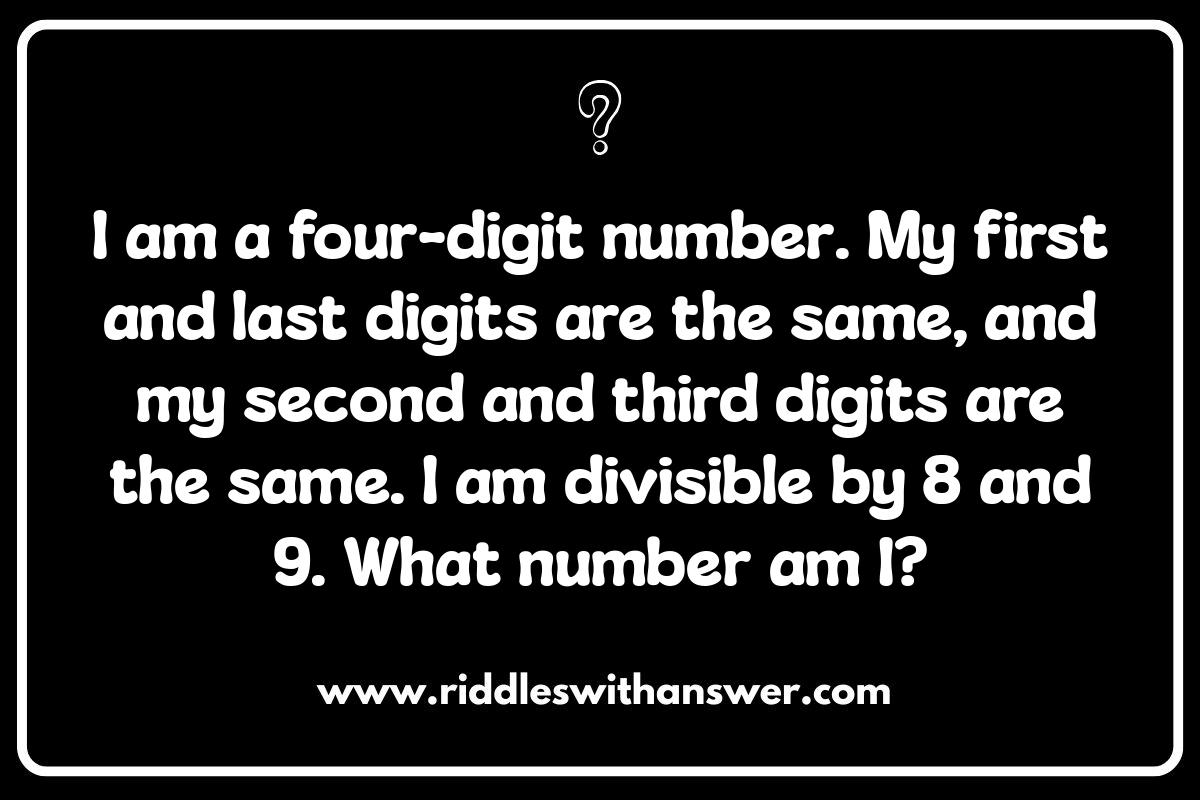
I am a four-digit number. My first and last digits are the same, and my second and third digits are the same. I am divisible by 8 and 9. What number am I?
8118
I am a number less than 100. I am a multiple of 13, and the sum of my digits is a perfect square. What number am I?
52
I am a prime number that is also the digital root of a perfect square. What number am I?
7
I am a three-digit number. All my digits are different prime numbers, and I am divisible by 6. What number am I?
234
I am a number. If you multiply me by 5, and then subtract 10, you get the same result as multiplying me by 3, and then adding 2. What number am I?
6
I am formed by listing the number of divisors that each number has, starting at 1. What follows 2, 2, 3?
2
I am the smallest Carmichael number. What number am I?
561
I am a three-digit number. All my digits are odd, and they are in descending order. The sum of my digits is 15. What number am I?
951
I follow this sequence: 1, 1, 2, 3, 5... What is the next number?
8
I am a two-digit number. My digits are the same. I am greater than 70, and I am a perfect square. What number am I?
81
I am a prime number. If you add the number of sides on a square to me, the result is 15. What am I?
11
I am a number less than 20. I am a prime number, and if you add 4 to me, I am divisible by 3. What am I?
11
I am a number. The sum of my digits is 7. I am between 40 and 50. What am I?
43
I am a prime number. If you reverse my digits, I am still a prime number. I am greater than 30 and less than 40. What am I?
37
If you multiply me by 4, add 12, and then divide by 2, you get 18. What number am I?
6
Number Riddles for Mathematicians: Unveiling Hidden Structures
Dive into the captivating world of "Number Riddles for Mathematicians"! This collection unveils hidden mathematical structures through challenging puzzles designed to tickle the brains of seasoned number enthusiasts. Explore elegant patterns, unravel complex relationships, and sharpen your problem-solving skills with these carefully crafted numerical enigmas. Prepare for a delightful intellectual...
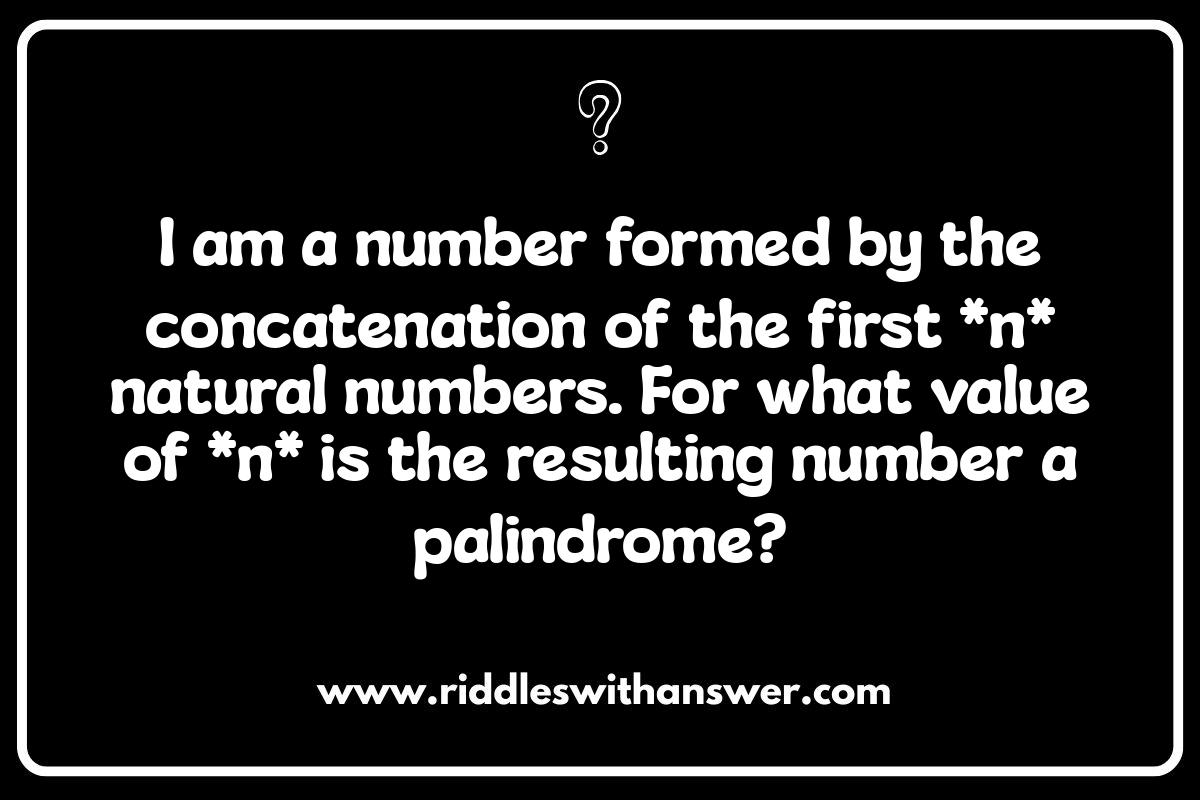
I am a number formed by the concatenation of the first *n* natural numbers. For what value of *n* is the resulting number a palindrome?
1, 2, 3, 8, 11
I am a sequence where each number is the sum of the squares of the digits of the previous number. If my first number is 7, what will always be the final, repeating number?
1, 4, 16, 37, 58, 89, 145, 42, 20 (cycle)
I am a number. If you multiply me by 7, and then subtract that product from 100, you get the original number back. What number am I?
10
I am a prime number that remains prime even after removing any number of digits from the right. I am greater than 100. What is the smallest such number?
23
I am a sequence in which each term is the product of the digits of the previous term. If the first term is 27, what is my second term?
14
I am a three-digit number. My digits are all prime, and I am divisible by 3. I am less than 300. What number am I?
225
I am a number less than 100. I am the product of two different prime numbers, and the sum of my digits is 11. What am I?
38
I am a number. If you multiply me by 5, add 18, and then divide by 2, you get 24. What number am I?
6
I am a sequence that starts with 1. Each subsequent term is found by adding the previous number to the number of its divisors. What is my second number?
3
I am a two-digit number that is the product of two consecutive prime numbers. My digits add up to 12. What number am I?
35
I am a number. If you divide 42 by me, you get the same result as subtracting me from 13. What am I?
6 or 7
I am a prime number less than 50. When you add 3 to me, the result is a perfect square. What number am I?
11
I am a two-digit number. My digits are the same. I am a perfect square and the sum of my digits is 8. What number am I?
44
I am a number. If you multiply me by 5, and then subtract 8, you get the same result as multiplying me by 3, and adding 20. What number am I?
14
I am a number less than 100. I am a multiple of 17, and the sum of my digits is 8. What am I?
17
Mathematical Number Riddles: Exploring Advanced Concepts
Delve into the captivating world of "Mathematical Number Riddles: Exploring Advanced Concepts," a collection designed to test the sharpest minds. These aren't your average puzzles; expect problems woven with intricate number theory, abstract algebra, and complex analysis. Prepare to unlock hidden patterns and stretch your mathematical prowess to its very...
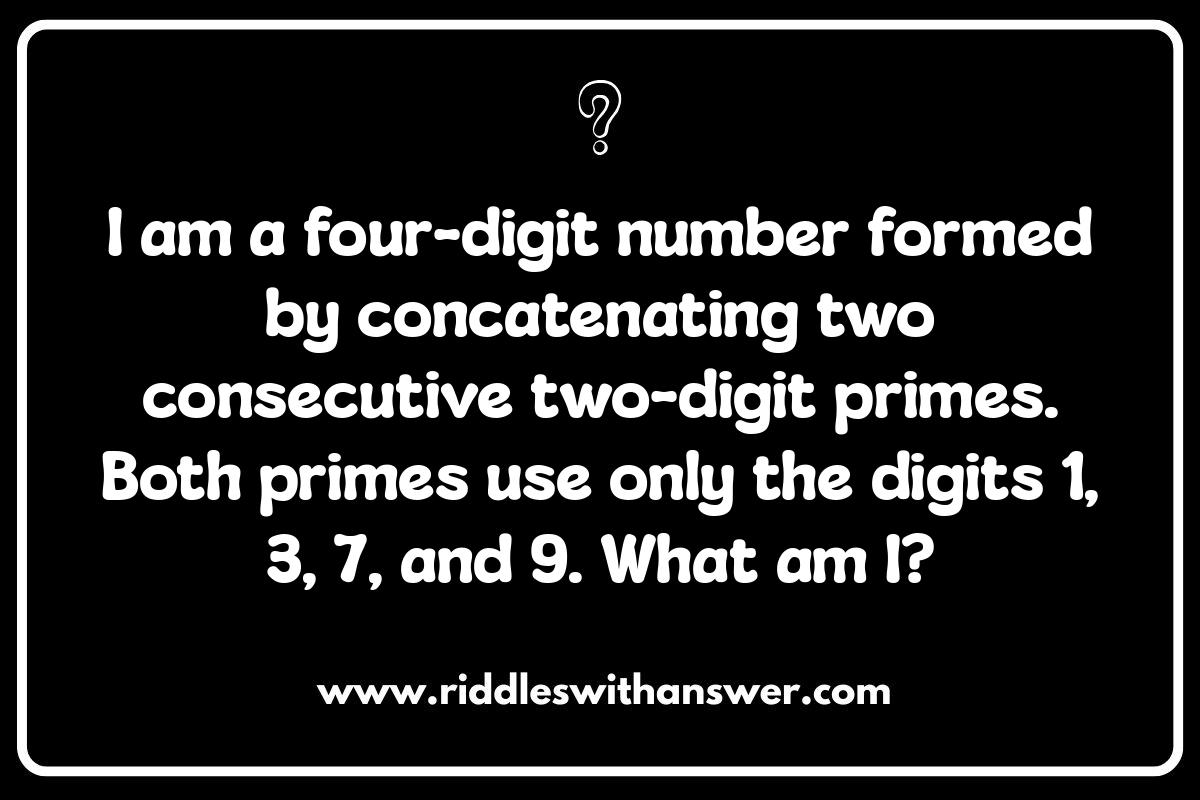
I am a four-digit number formed by concatenating two consecutive two-digit primes. Both primes use only the digits 1, 3, 7, and 9. What am I?
3731
I am a number equal to the sum of the digits of my cube. I am greater than 100 but less than 500. What am I?
407
I am a sequence. My first term is 1. My second term is 1. Every term after that is the sum of the previous term and twice the term before that. What is my 6th term?
41
I am a prime number. If you multiply me by 6 and subtract 1, you get a perfect square. If you multiply me by 8 and add 1, you also get a perfect square. What am I?
5
I am a three-digit number that can be expressed as the sum of two cubes in two different ways. My digits are all distinct primes. What am I?
1729 (Hardy-Ramanujan number, but the digit constraint makes it trickier)
I am a sequence created with the following rule: Start with any positive integer n. If n is even, divide it by 2 to get n / 2. If n is odd, multiply it by 3 and add 1 to get 3n + 1. What do all numbers in the sequence eventually resolve to?
1 (Collatz Conjecture, still unproven, but the riddle implies it holds)
I am a number. If you multiply me by 12, add 36, and then take the square root, you get the same result as adding 6 to me. What number am I?
9
I am the smallest number that can be written as the sum of two squares in three different ways. What am I?
325 (1^2 + 18^2 = 6^2 + 17^2 = 10^2 + 15^2)
I am a two-digit number. My digits are different prime numbers. If you swap my digits, the new number is twice the sum of my digits. What number am I?
37
I am a number less than 100. I am a multiple of 11, and if you reverse my digits, I am also prime. What am I?
11
I am a sequence in which each term is the sum of the digits of the previous term, cubed. If I start with 12, what is my third term?
729
I am a number less than 50. I am divisible by 6, and the sum of my digits is a perfect square. What am I?
36
I am the number of distinct arrangements of the letters in the word "BANANA". What am I?
60
I am a three-digit number. My hundreds digit is a perfect square greater than one. My tens digit is a prime number. My ones digit is the number of sides on a triangle. What is the largest number I could be?
973
I am a number, if you multiply me by myself, and then subtract that product by 1, I am divisible by both 7 and 8. What is the smallest number that I could be?
9
Challenging Number Riddles: A Deep Dive into Prime Numbers
For mathematicians seeking a stimulating mental workout, "Challenging Number Riddles: A Deep Dive into Prime Numbers" offers a fascinating journey. Unravel intricate puzzles where primes hold the key. Explore their unique properties, test your analytical skills, and discover the elegant solutions hidden within these formidable numerical challenges. Prepare for an...
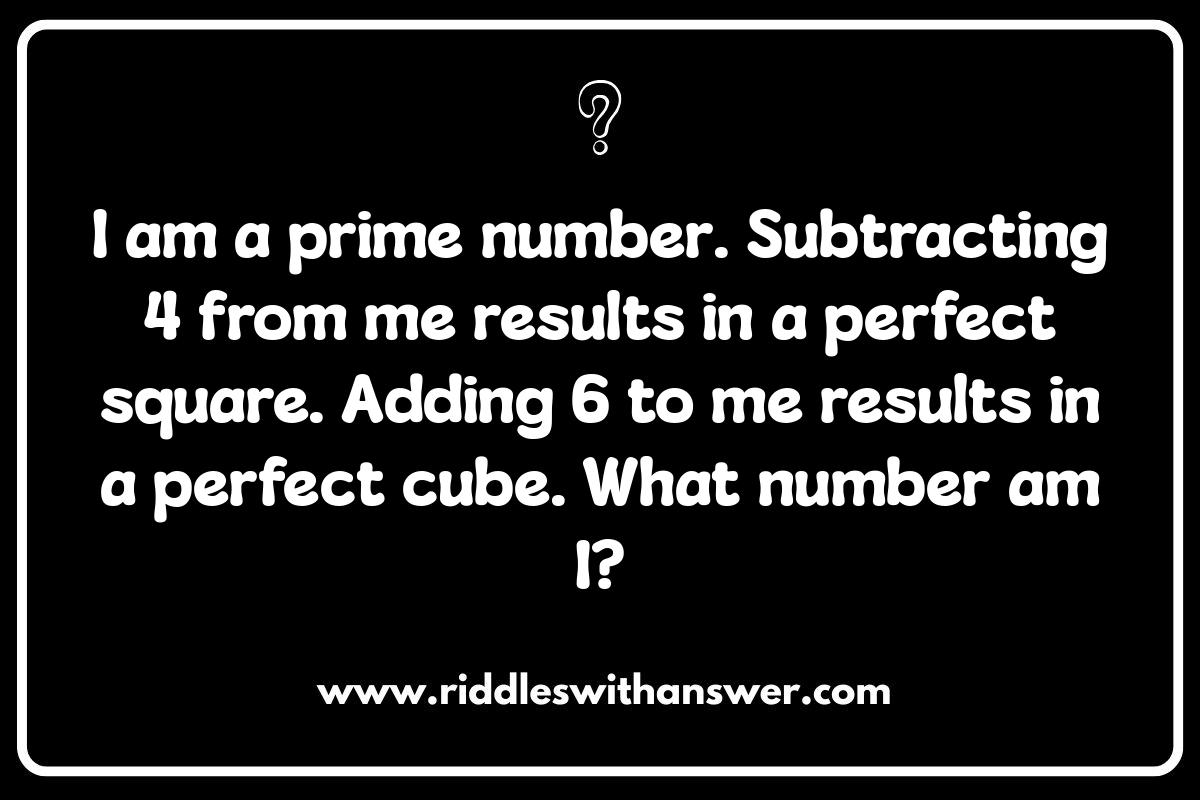
I am a prime number. Subtracting 4 from me results in a perfect square. Adding 6 to me results in a perfect cube. What number am I?
43
I am a six-digit number. My first digit is prime, and the number formed by my first three digits is also prime. I am divisible by 11 and consist of only 2 prime numbers. What number am I?
223322
I am a prime number less than 100. If you reverse my digits, I am no longer prime. The sum of my digits is a perfect square. What number am I?
89
I am the smallest prime number that is the sum of five consecutive primes. What am I?
11
I am a three-digit number. All my digits are prime, and they are consecutive. I am divisible by 7. What number am I?
357
I am a prime number. If you multiply me by 6 and add 9, the result is a perfect square. If you multiply me by 8 and add 16, the result is a perfect cube. What number am I?
7
I am a two-digit number. My digits are different prime numbers. I am one more than a perfect square and one less than a perfect cube. What number am I?
53
I am the smallest Carmichael number whose digits do not include 0, 5, or any even number. What number am I?
1729
I am the sum of the first *n* prime numbers, and I am also a perfect square. I am less than 100. What number am I?
49
I am a prime number. Square me, then subtract 1. The result is divisible by 12. I am less than 10. What number am I?
5
I am a three-digit number. My digits are all prime, and when reversed, I am exactly one more than a prime number that is also the result of the first number being squared. What number am I?
223
I am a prime number. If you add 2 to me, I am still prime. If you add 4 to me, I am still prime. If you add 6 to me, I am still prime. If you add 8 to me, I am still prime. If you add 10 to me, I am still prime. However, If you add 12 to me, I am no longer prime. What number am I?
5
I am a prime number. I am also a Mersenne prime. Both my prime number and my exponent are single digits. What number am I?
7
I am a four-digit number. My first and last digits are the same prime number, and my middle two digits are also the same prime number. I am the product of three consecutive prime numbers. What number am I?
2187
I am a prime number less than 50. If you multiply me by 3 and add 1, I am divisible by 10. If you multiply me by 5 and subtract 1, I am a perfect square. What number am I?
13
Number Riddles for Mathematicians: The Art of Logical Deduction
Dive into "Number Riddles for Mathematicians"! This book sharpens your logical deduction skills with challenging number riddles. Designed for math enthusiasts, each puzzle tests your ability to dissect patterns, apply mathematical principles, and uncover hidden relationships. Prepare for a stimulating mental workout that will elevate your problem-solving prowess.
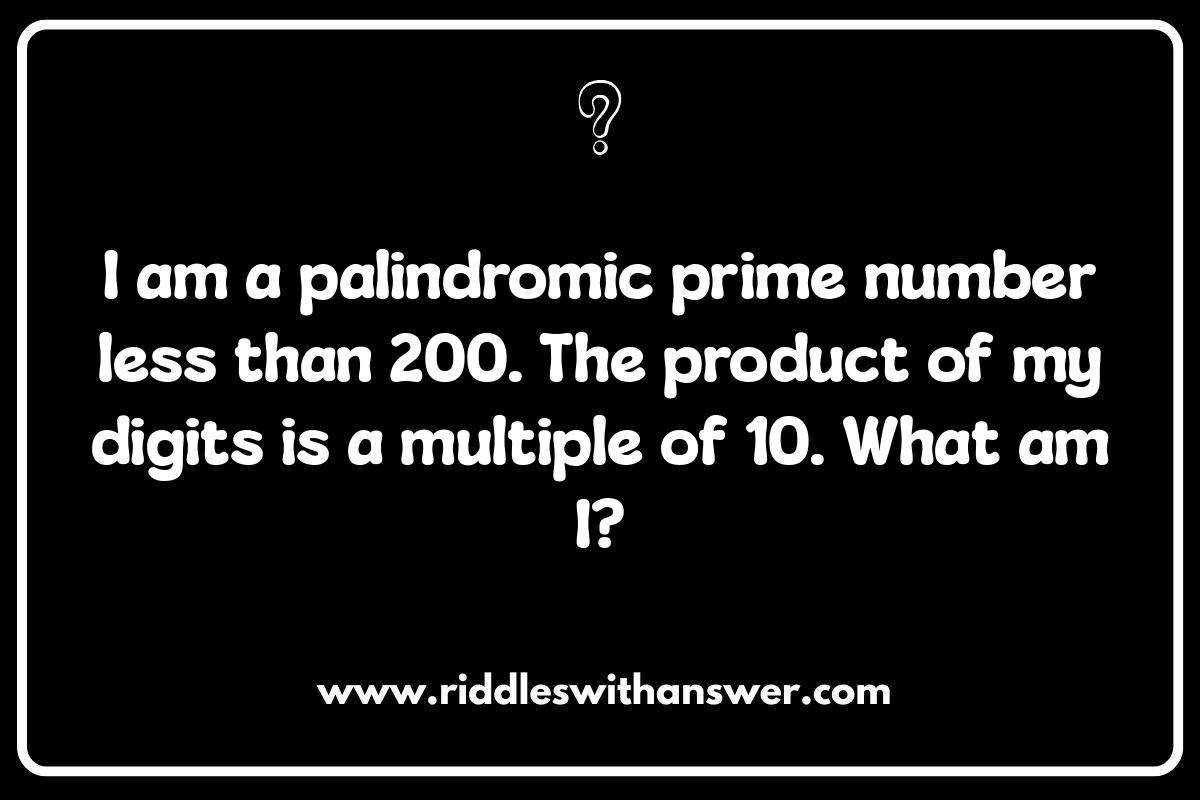
I am a palindromic prime number less than 200. The product of my digits is a multiple of 10. What am I?
101
A sequence starts with 1. The next number is the sum of all positive integers up to the previous number. What is the fourth number in the sequence?
15
I am a three-digit number. The sum of my digits is 17, and I am divisible by 11. What number am I?
863
I am a two-digit number. Both of my digits are odd, and I am divisible by 3. The difference between my digits is 4. What number am I?
95
I am the smallest number that can be expressed as the sum of two squares in four different ways. What number am I?
325
My first term is 1. My terms alternate between adding consecutive numbers and subtracting consecutive numbers. What is my fifth number?
-1
I am a number less than 100. I am divisible by 6 and 8, but not by 12. What number am I?
24
I am a prime number. If you multiply me by 10 and add 1, the result is a perfect square. What number am I?
3
I am a five-digit number. My first and last digits are the same, and are prime. My second and fourth digits are the same and are even. My middle digit is the sum of the second and fourth digits. I am divisible by 3. What am I?
32423
I am a number formed by the concatenation of the first few prime numbers (2, 3, 5, 7, 11, 13, 17, etc.). I am also a prime number. What am I if I consist of only two prime numbers?
23
I am a sequence where the differences between consecutive terms form an arithmetic progression with a common difference of 1. My first two numbers are 2 and 5. What is my fifth number?
20
I am a four-digit number. My digits are consecutive and in descending order. I am divisible by 5, but not by 10. The sum of my digits is odd. What number am I?
6545
I am a prime number less than 100. If you reverse my digits, the new number is also a prime number. The difference between my digits is 2. What number am I?
31
I am a number less than 20. I am divisible by 3. If you add 1 to me, I become a Fibonacci number. What number am I?
15
I am a number. If you multiply me by 5, add 8, and then divide by 3, you get the same result as multiplying me by 2 and adding 1. What number am I?
-1
Mathematical Number Riddles: Bridging Theory and Problem-Solving
Dive into the captivating world of mathematical number riddles! These aren't just puzzles; they're bridges connecting abstract theory with practical problem-solving. For mathematicians seeking a stimulating challenge, these riddles offer a playground to test your knowledge, sharpen your skills, and unlock the elegant beauty hidden within numbers.
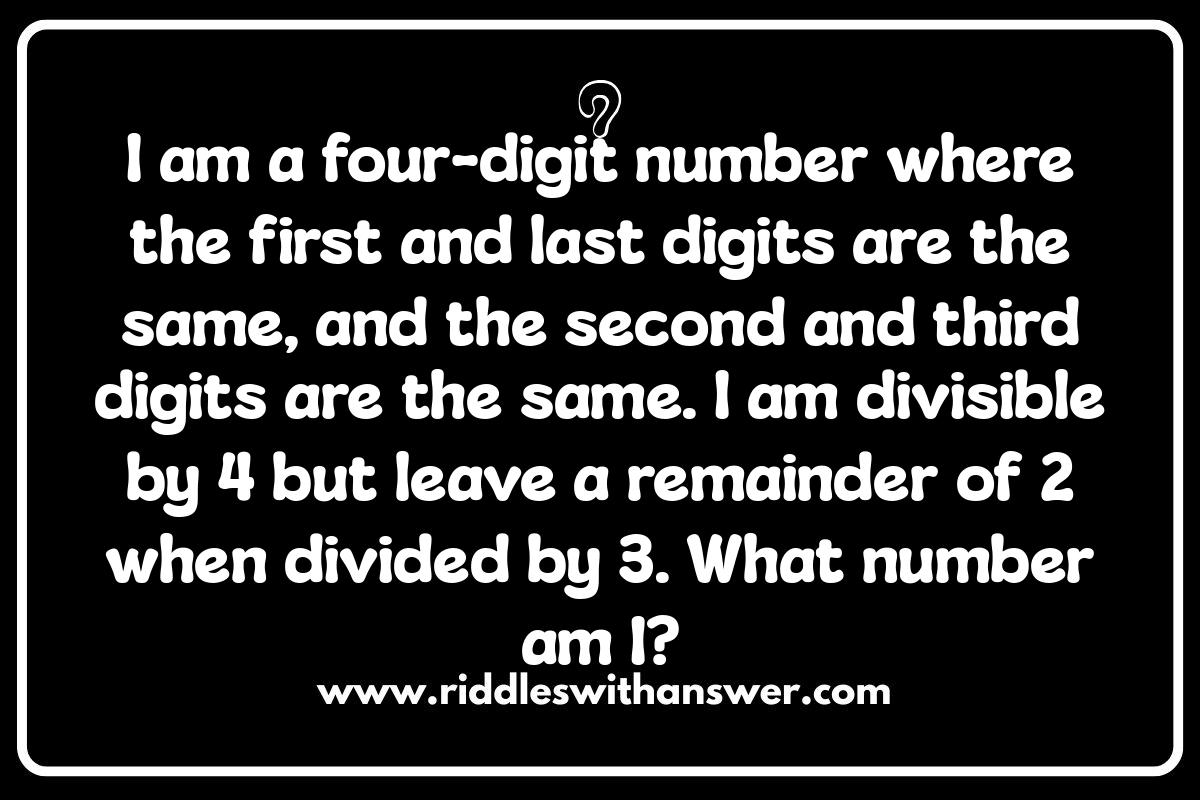
I am a four-digit number where the first and last digits are the same, and the second and third digits are the same. I am divisible by 4 but leave a remainder of 2 when divided by 3. What number am I?
2112
I am a number that is 1 less than a perfect square and 1 more than a perfect cube. I am greater than 0. What number am I?
26
If you add the number of vertices on a tetrahedron, the number of sides on a hexagon, and the number of faces on a dodecahedron, what number would you get?
24
I'm formed by adding consecutive even numbers, starting with 0. What comes after 0, 2, 6, 12, 20, 30?
42
I am a prime number less than 60. My tens digit is two more than my ones digit. What number am I?
41
I am a two-digit number. Both of my digits are prime. If you multiply me by 2 and then add the sum of my digits, I am a palindrome. What number am I?
23
I am a number less than 50. I am a multiple of 7, and I am one more than a perfect square. What number am I?
36
I am the number of sides on a heptagon, plus the number of faces on a triangular prism, minus the number of vertices on a square pyramid. What am I?
10
I am a sequence where each number is the square root of the previous number, plus 1. If my first number is 0, what is my third number, rounded to the nearest whole number?
2
I am a number that, when divided by 2, has the same digits reversed. What am I?
11
I am a number that is both the sum of the first *n* integers and the sum of the first *m* cubes, where *n* and *m* are positive integers. I am less than 500. What number am I?
1
If A=1, B=2, C=3, and so on, what number does the word "FACED" represent?
28
I am a two-digit number. My digits are the same. I am a multiple of 11 and a perfect cube. What number am I?
88
I am a four-digit number. My first and last digits are the same, and my second and third digits are the same. I am divisible by 9. What number am I?
1881
I am a number less than 50. I am divisible by 3 and 5. When I am divided by 4, I have a remainder of 3. What am I?
15
Challenging Number Riddles: From Algebra to Geometry
Dive into "Challenging Number Riddles," a playground for mathematical minds! This collection stretches beyond simple arithmetic, venturing into the elegant landscapes of algebra and geometry. Prepare for brain-teasing puzzles designed to sharpen your problem-solving skills and ignite your passion for the beauty hidden within numbers.
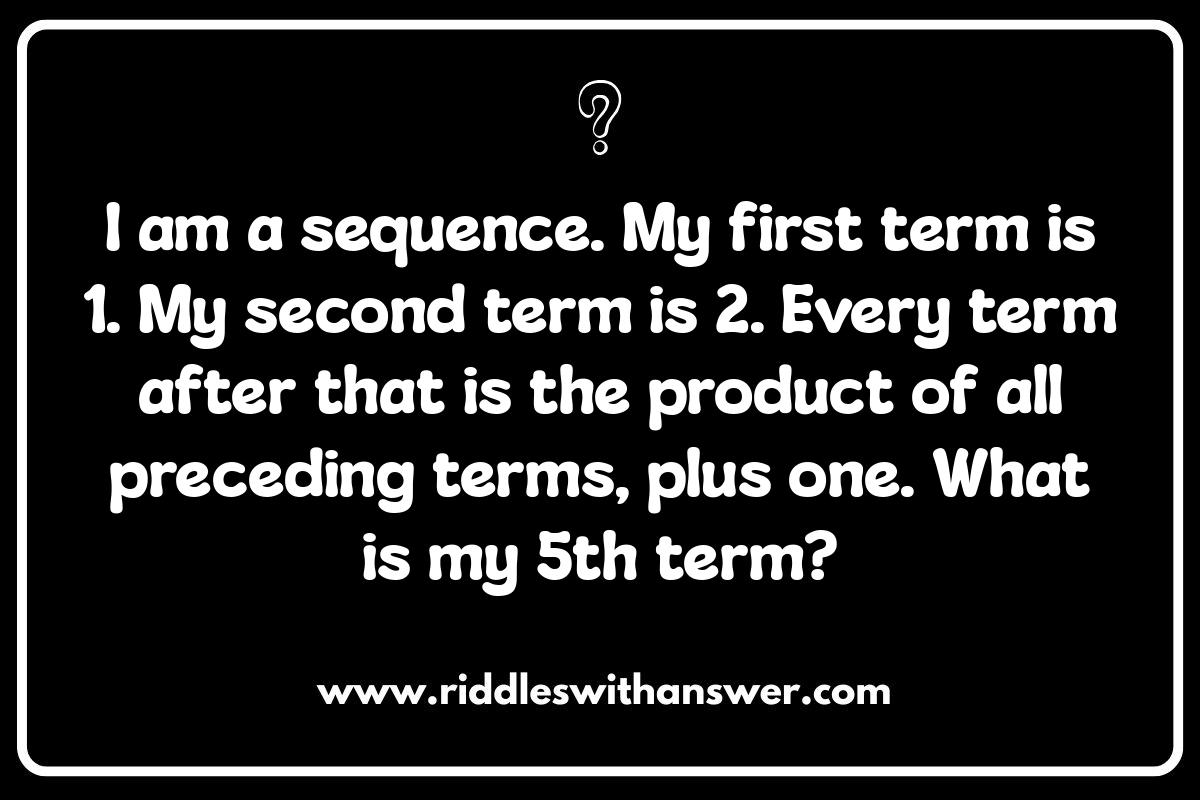
I am a sequence. My first term is 1. My second term is 2. Every term after that is the product of all preceding terms, plus one. What is my 5th term?
71
I am a four-digit number. My first and last digits are the same, and they are prime. My second and third digits are the same, and they are non-zero. I am divisible by 11. What am I?
3113
I am a prime number less than 100. The sum of my digits is a perfect cube. What number am I?
61
I am a sequence where each term is the product of the previous two terms minus 1. If my first two terms are 2 and 3, what is my fourth term?
35
I am a three-digit number, all my digits are different, and I am divisible by 3. One of my digits is 7, and the other is 1. What is the third?
4 (The number is 174, 714, 417 or 471)
I am a number that, when divided by 2, has the same number of digits but reversed. What am I?
11
I am a series that builds by adding consecutive even numbers, starting with 0. What is my seventh number?
42
I am a prime number. If you multiply me by 3 and add 8, I am no longer a prime number. If you multiply me by 4 and add 5, I am still a prime number. I am less than 20. What number am I?
3
I am a two-digit number. My digits are both odd and different. I am a multiple of 3, and I am greater than 70. What am I?
93
I start at 1. Each following number is the sum of the previous number, squared. What is my third number?
10
I am a prime number. If you multiply me by 4 and add 3, the result is a prime number. If you multiply me by 6 and subtract 3, the result is also a prime number. I am less than 20. What number am I?
2
I am a four-digit number. I am a palindrome and divisible by 9, but not by 11. If my first digit is 7, what am I?
727
I am a number greater than 20, but less than 30. The sum of my digits is 10. What am I?
28
I am a number. If you multiply me by 3, then add 5, you get the same result as multiplying me by 2, and adding 9. What number am I?
4
I am a prime number. If you subtract 2 from me, you get another prime number. If you add 2 to me, you get another prime number. If you subtract 6 from me, you get another prime number. What number am I?
11